
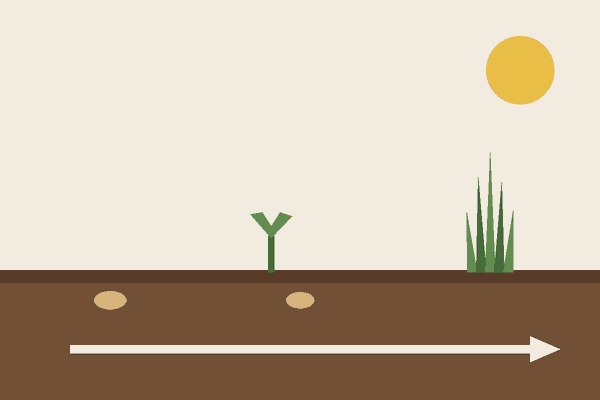
Most lawn grass seed germinates in 5 to 30 days. According to the University of California’s UC IPM lawn guide, perennial ryegrass sprouts in 5 to 10 days, tall fescue in 7 to 12, hard and red fescues in 7 to 14, Kentucky bluegrass in 14 to 30 and seeded bermudagrass in 10 to 30. The biggest factor is soil temperature: University of Maryland Extension puts the optimum for grass seed germination at 50 to 70°F, measured about an inch deep. Once the seed has sprouted, a seeded lawn can take up to two months to fill in and become established.
Need to know how much seed to buy first? Use the Grass Seed Calculator or read how much grass seed do I need.
Grass seed germination time by type
These are the expected germination times published in the UC Guide to Healthy Lawns, in days under good conditions.
| Grass type | Season | Days to germinate |
|---|---|---|
| Perennial ryegrass | Cool-season | 5–10 |
| Annual ryegrass | Cool-season | 5–10 |
| Tall fescue | Cool-season | 7–12 |
| Hard fescue | Cool-season | 7–14 |
| Red fescue | Cool-season | 7–14 |
| Kentucky bluegrass | Cool-season | 14–30 |
| Bermudagrass (seeded) | Warm-season | 10–30 |
| Buffalograss | Warm-season | 14–30 |
UC IPM also notes that perennial ryegrass can sprout in as little as 3 to 5 days in moderate temperatures, and that it gives rapid turf cover within 4 to 8 weeks. UC IPM does not list zoysiagrass or centipedegrass. Seed company Pennington says zoysiagrass may take two to three times longer than bermudagrass, and that Kentucky bluegrass can take two to three times as long as tall fescue.
Soil temperature is the clock
Seed sprouts when the soil is warm enough, not when the calendar says so. A soil thermometer pushed in about an inch gives a better answer than the air temperature. To pick the best season for your grass type and region, see when to plant grass seed.
- Cool-season grasses (ryegrass, fescues, Kentucky bluegrass): University of Maryland Extension gives 50 to 70°F, measured at about a 1-inch depth. It recommends planting cool-season grass in late summer to early autumn (mid-August to mid-October in Maryland).
- Warm-season grasses (bermudagrass, zoysiagrass, centipedegrass): Pennington says they germinate best when soil is consistently 65 to 70°F. UC IPM lists seeded bermudagrass for late spring or early summer, and the University of Maryland warns that warm-season grasses planted too early or too late may be chilled into dormancy.
Cool soil does not kill the seed, but it can leave it waiting. University of Maryland Extension notes that ungerminated fall-sown seed will die over the winter, with the exception of Kentucky bluegrass.
What to expect, week by week
| When | What you may see |
|---|---|
| Days 1–7 | Usually bare soil. Perennial ryegrass can show first, in as little as 3 to 5 days in moderate temperatures. |
| Days 7–14 | Tall fescue and fine fescues start to appear. |
| Days 14–30 | Kentucky bluegrass and seeded bermudagrass finally emerge, so a lawn that looks bare at two weeks can still be on schedule. |
| Weeks 4–8 | Ryegrass gives rapid cover within 4 to 8 weeks. A seeded lawn can take up to two months to become established. |
Seed mixes can look patchy while they come up, because the grasses in them germinate at different speeds. That is normal and not a sign of a failed lawn.
What speeds up or slows down germination
- Water: University of Maryland Extension says to irrigate seed immediately after planting. Without irrigation, expect poorer germination, and postpone planting during a drought. For a stage-by-stage schedule, see how often to water grass seed.
- Light and depth: grass seed needs light to germinate. It should not be covered with more than about ½ inch of soil or ¼ inch of compost or straw. Raking is not necessary, though lightly covering the seed can improve germination.
- Weeds: germinating grass cannot out-compete established weeds, so remove them before seeding. Crabgrass preventer can also stop grass seed from germinating, so check the label before you sow.
- Seed quality: the label shows the germination percentage and when the seed was tested. Old or low-germination seed sprouts less evenly.
- Grass type: a slow species such as Kentucky bluegrass will always take longer than ryegrass, whatever you do.
When to worry
Before you reseed, check these in order:
- How long has it been? Kentucky bluegrass and seeded bermudagrass can take up to 30 days.
- Soil temperature: is the soil inside the range for your grass type?
- Moisture: has the seedbed stayed moist since planting, or did it dry out?
- Depth and contact: was the seed buried too deep, or left on hard, bare ground?
- The label: is the seed old, or was it sold with a low germination rate?
If conditions have been right for well beyond the expected time and patches are still bare, reseed those areas.
Common questions
Can grass seed germinate in cold weather?
Cool-season seed germinates best at 50 to 70°F soil temperature. Colder soil slows it or leaves it waiting, and University of Maryland Extension says ungerminated fall-sown seed will die over winter, except Kentucky bluegrass.
How long until a new seeded lawn is established?
UC IPM says lawns planted from seed, stolons or plugs can take up to two months to become established. Germination is only the first step.
Why have only some of my seeds sprouted?
Most seed mixes combine grasses that germinate at different speeds, such as fast ryegrass with slow Kentucky bluegrass, so the lawn fills in over several weeks.
Bottom line
Expect ryegrass and fescues in about 5 to 14 days, Kentucky bluegrass and seeded bermudagrass in 14 to 30, and up to two months for the lawn to establish. Seed when the soil is in the right range, keep the seedbed moist and do not give up too early. To work out how much to buy, use the Grass Seed Calculator and how much grass seed do I need. If you would rather not wait, sod gives an instant lawn: see the Sod Calculator, how to lay sod and how often to water new sod.